 Call Us :- 08071781550
 Send Inquiry
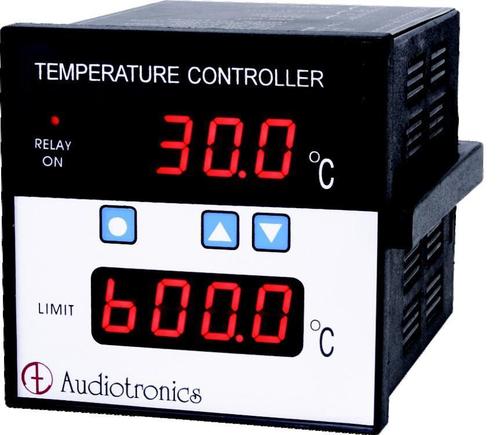
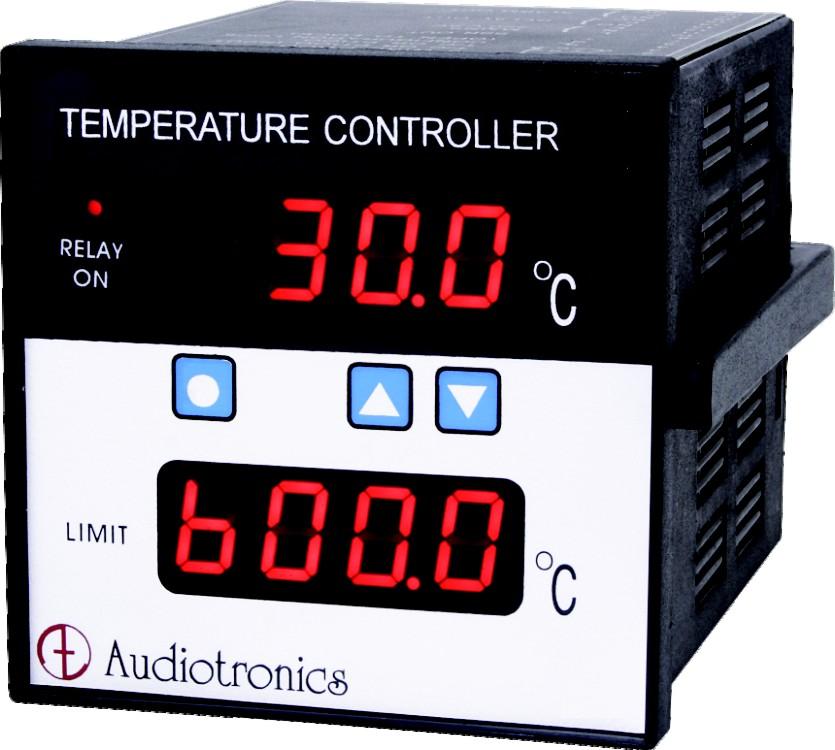
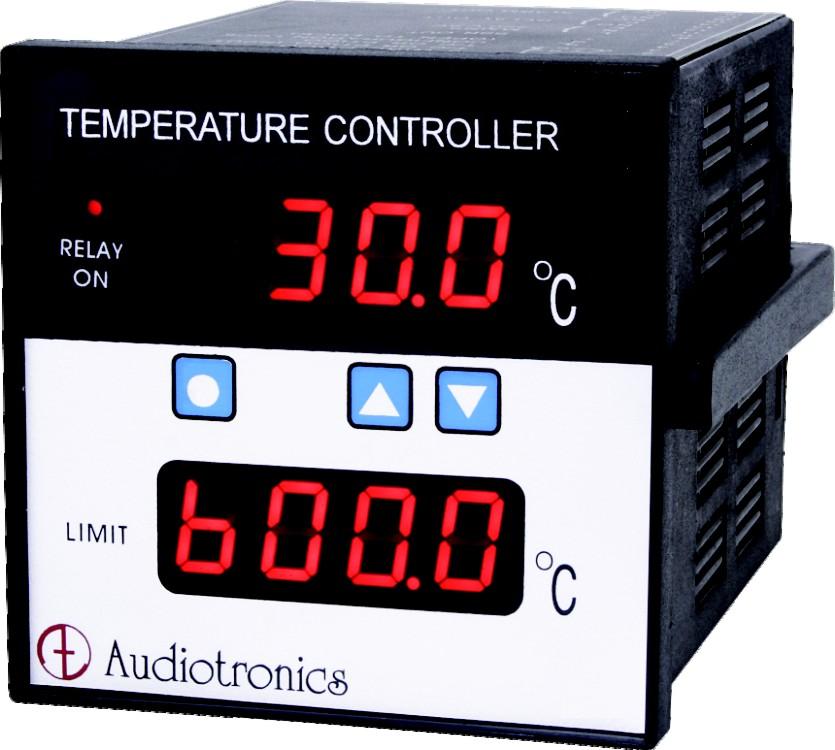
Universal Temperature Controller Model 6615
1600.0 INR/Unit
Product Details:
- Type Universal Temperature Controller
- Theory PID (Proportional-Integral-Derivative) Control
- Exterior Material ABS Plastic Housing
- Interior Material N/A (Electronic Instrument)
- Insulation Material N/A (Electronic Instrument)
- External Size 96 x 96 x 73 Millimeter (mm)
- Circulation System Electronic Forced Air Ventilation (if used with enclosure)
- Click to View more
X
Universal Temperature Controller Model 6615 Price And Quantity
- 1 Unit
- 1600.0 INR/Unit
Universal Temperature Controller Model 6615 Product Specifications
- N/A (Not applicable for this model)
- Supports external compatible cooling devices via relay output
- Universal Temperature Controller
- Electronic Forced Air Ventilation (if used with enclosure)
- N/A (Not applicable for this model)
- ABS Plastic Housing
- N/A (Electronic Instrument)
- 96 x 96 x 73 Millimeter (mm)
- Supports external compatible heaters via relay output
- PID (Proportional-Integral-Derivative) Control
- N/A (Electronic Instrument)
- 0 to 1200 Celsius (oC)
- Digital Microcontroller Based
- 5 times/second
- -10C to 60C
- 0C to 50C
- LED indicators for control state
- Dual 4-digit 7 Segment LED Display
- 230V AC, 50 Hz
- Relay or SSR Driver Output
- Digital Keys
- 0.5% F.S. + 1 Digit
- Configurable High/Low Temperature Alarm
- Thermocouple (J/K) & RTD (PT100) Selectable
- Panel Mount
Universal Temperature Controller Model 6615 Trade Information
- New Delhi
- Cash in Advance (CID), Cheque, Telegraphic Transfer (T/T)
- 100 Unit Per Month
- 20 Week
- Contact us for information regarding our sample policy
- Asia, Australia, Central America, North America, South America, Eastern Europe, Western Europe, Middle East, Africa
- All India
Product Description
Model 6615 Universal Temperature Controller
Features:
- Microprocessor based controller, linearised for PT100 sensor & 3 thermocouples (J,K,R) with Auto cold junction compensation.
- Separate displays for Temperature and Set Point
- Relay programmable as Heater or Cooler logic
- Offset digitally programmable from front
- Configuration lockable by rear jumper
- Proportional/On-Off control user selectable
- User programmable hysterisis band
- Percentage on time settable to avoid overshoots and save power
- Non-volatile memory to save settings
- Aesthetically designed front panel with membrane switches
Specification
|
Display |
4+4 digit 0.56 7 segment Red LED |
|
Sensor |
J,K,R & 3 wire PT100 |
|
Range |
J T/C : 0 to 750C K T/C : 0 to 1250C |
|
Accuracy |
0.1% of Full Scale 1 digit |
|
Relay Logic |
Programmable as Heater/Cooler logic |
|
Proportional Band |
-7.0C to +3.0C around set point with |
|
Hysterisis Band |
Settable from 0C to 20.0C |
|
Percentage Power |
User programmable from 0% to 100% to |
|
Offset Band |
Settable from -20.0C to +20.0C |
|
Memory |
Non-volatile EEPROM to save settings |
|
Configuration Lock |
Open terminals 4&5 to lock the Sensor |
|
Supply |
220V AC 15% @ 50/60Hz |
|
Dimensions |
96mm x 96mm x 135mm. |
|
Weight |
800 grams |
Advanced Dual Display Control
The Model 6615 controller boasts a dual 4-digit LED display that simultaneously shows the current temperature and setpoint values. This dual display enhances operational clarity and allows for faster adjustments and monitoring during critical processes. The clear LED indicators conveniently signal control states, ensuring operators always have immediate visual feedback.
Flexible Input and Output Options
Tailored for diverse industrial settings, the controller supports both Thermocouple (J/K) and RTD (PT100) sensors with easy input selection. Outputs include either relay or SSR driver options, granting seamless integration into various heating or cooling systems. Its panel mounting and standard external size ensure compatibility with most control panels.
Reliable Performance and Safety Features
With a control accuracy of 0.5% F.S. plus one digit and a fast 5 samples/second rate, this device ensures responsive and stable temperature control. Configurable high/low temperature alarms provide an additional safety layer, making it suitable for critical process environments. Its ABS plastic housing enhances durability and safety in industrial operations.
FAQs of Universal Temperature Controller Model 6615:
Q: How do I select between thermocouple and RTD input types on the Model 6615?
A: Input selection for thermocouple (J/K) or RTD (PT100) on the Model 6615 is completed via digital key settings on the front panel. Follow the instruction manual to access the input type configuration menu and choose the desired sensor for your application.Q: What is the process for setting the temperature and alarms using this controller?
A: Temperature and alarm settings are adjusted using the digital keys on the front panel. Users can program desired setpoints and configure high or low alarm thresholds as per process requirements. The values are clearly visible on the dual LED display, enhancing setup accuracy.Q: Where can this temperature controller be used?
A: The Model 6615 is designed for industrial or laboratory environments where precise temperature control is required. It is ideal for heating or cooling systems, ovens, incubators, and other applications involving process temperature regulation within the 0C to 1200C range, depending on the sensor used.Q: What are the main benefits of using the Model 6615 Universal Temperature Controller?
A: Key benefits include high precision control with PID theory, flexible sensor compatibility, relay/SSR outputs for system integration, dual easy-read LED display for operational convenience, and configurable alarms for enhanced safety. Its robust design ensures reliable performance in demanding environments.Q: When should the internal forced air ventilation system be used?
A: Electronic forced air ventilation should be employed when installing the controller in an enclosure prone to heat buildup. This helps maintain optimal operating temperatures for the controller, especially during continuous or high-power applications.Q: How does the Model 6615 support external heating and cooling systems?
A: The controller features relay or SSR driver outputs that allow direct control of external compatible heaters and cooling devices. This makes it a suitable central control component for systems needing automatic temperature regulation.Tell us about your requirement

Price:
Quantity
Select Unit
- 50
- 100
- 200
- 250
- 500
- 1000+
Additional detail
Mobile number
Email

Other Products in 'Digital Temperature Indicators Controllers' category



Contact Details

- BNo 3/1/29 ,0,SITE-IV INDL. AREA SAHIBABADGhaziabad - 201010, Uttar Pradesh, India
- Phone : 08071781550
AUDIOTRONICS
Ghaziabad, Uttar Pradesh, India
Ghaziabad, Uttar Pradesh, India

- Mr. Dinesh K. Gupta (CEO)
- countronindia@gmail.com

|

 Send Inquiry
 Send SMS
 Call Me Free
COUNTRONICS
All Rights Reserved.(Terms of Use)
Developed and Managed by Infocom Network Private Limited.
Developed and Managed by Infocom Network Private Limited.

